A massive shift : Inside Peplink’s MAX Orbit Series
22 Sep, 2026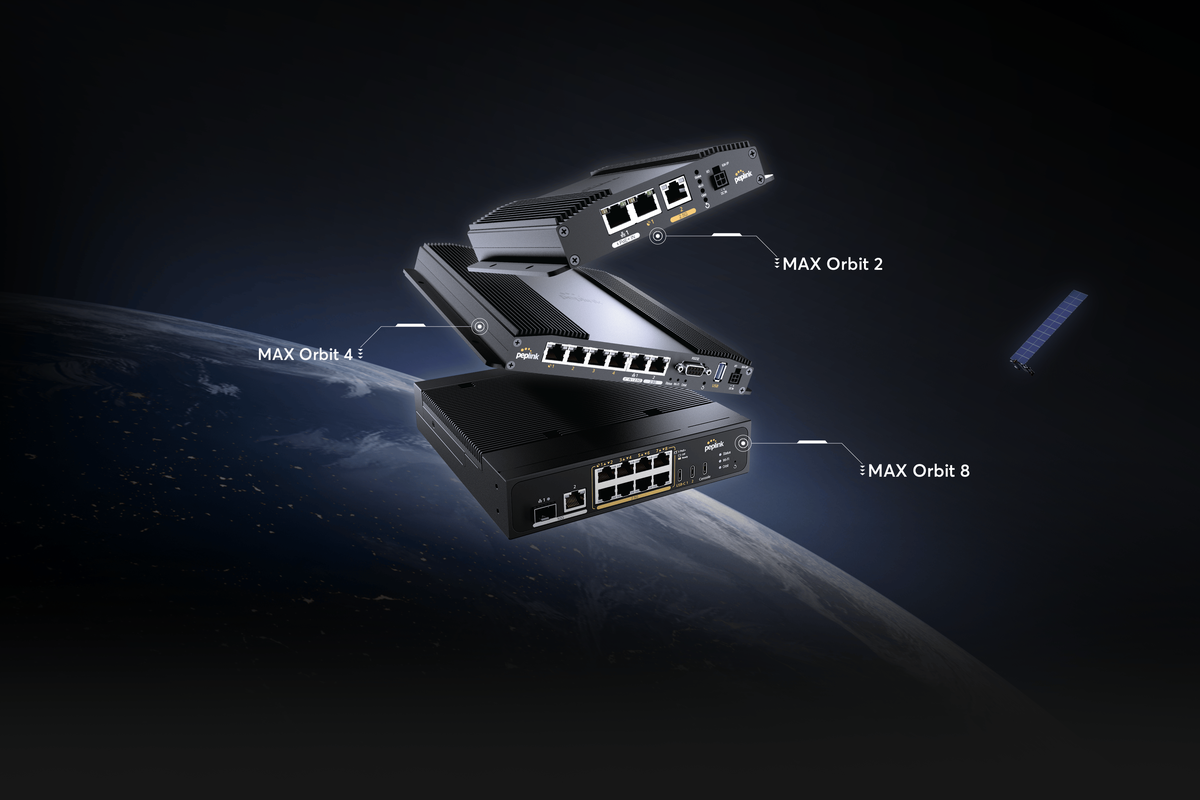
Peplink Orbit Series
“The Orbit Series draws a clear line in the sand.”
Venn Telecom’s tech team took a good look at Peplink’s MAX Orbit 2. Here’s our thoughts on what it means for enterprise connectivity, and what could happen next.
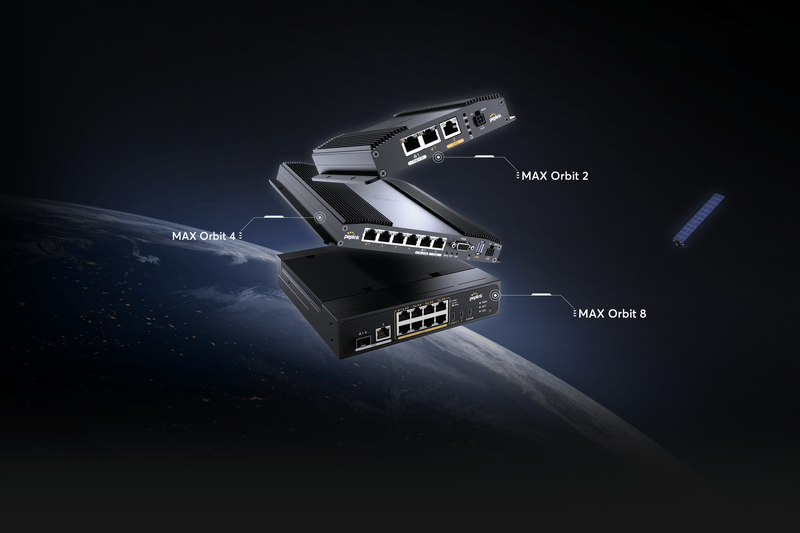
In this video, our CTO Martin Langmaid takes a good look at the new Peplink Orbit Series. This new Peplink lineup flips traditional routing on its head with more WAN ports than LAN port, acting like a central hub to capture and blend every piece of satellite and cellular connectivity available.
Martin sees the redesign as a massive shift in how to think about edge routing, moving beyond cellular-primary configurations to true multi-terminal satellite integration. Watch as Martin breaks it down below or read the full video transcript below.
Peplink Orbit Series: The Conceptual Change
Video transcript
Speaker, Martin Langmaid, Venn Telecom’s CTO.
Peplink Orbit Series: The Conceptual Change
Speaker: Martin Langmaid, CTO
A very easy mistake to make with the Peplink MAX Orbit Seriesis to assume that it is just a rebadge of previous hardware. In many ways, it is - the unit obviously looks like a BR1 Pro 5G, but is now designated as the Orbit 2.
So why should we care? Why should we consider the Orbit Series as something more than just removing cellular modems and rebadging the unit? Actually, that rebadging and that specific messaging represent one of the most important parts of the Orbit Series.
It is nice that you can now get devices featuring more WAN ports than LAN ports, a complete flip of how networking hardware has been designed to date. However, the Orbit Series is fundamentally a way of standing up and stating that the way we deliver connectivity at the edge has changed forever.
What do I mean by that?
For nearly a decade, we used standalone cellular connectivity whenever we needed to connect remote sites located far from existing terrestrial infrastructure. That approach had limitations, which we resolved by bonding multiple cellular links together. Yet, deployments still faced challenges: while indoor cellular signals can work, you will always achieve significantly better performance by mounting equipment externally.
Low Earth Orbit (LEO) satellite connectivity is even stricter: the terminal must be placed outside with an unobstructed view of the sky.
Because of this, we were forced to rethink edge connectivity architectures. We had LEO satellite terminals cabled back to cellular routers, and those cellular routers were frequently hooked up to external antennas over coaxial cable. This created an awkward juxtaposition of directly connected antennas and remotely deployed antenna systems.
The Orbit Series draws a clear line in the sand. It establishes that the correct way to design serious, redundant, resilient, and bonded edge connectivity today is to place your central WAN management hub inside your server rack or comms room alongside your internal IT infrastructure. Then, all the equipment that needs to access LEO and cellular networks is deployed outside where it belongs - where the signal is strongest.
The Orbit Series is therefore as much about recognizing the role of LEO satellites as it is about acknowledging the new network topology: a core management appliance at the center, surrounded by diverse external internet links feeding directly into it.
If I were deploying connectivity into a warehouse today, I would install an Orbit device in the rack and run cables out to remotely deployed cellular routers and roof-mounted LEO satellite systems. It functions like a spider: the central body sits in the rack, while the "legs" reach out to different corners and compass faces of the building to capture distinct cellular providers and satellite paths.
We are doing the exact same thing on maritime vessels, particularly large ships. We place LEO terminals on the upper decks, masts, and rigging, mount cellular antennas across the bow, stern, port, and starboard, capture whatever connectivity is available, and aggregate all of it back into the comms rack.
The Orbit Series is a committed step in that direction, and I am glad to see it arrive. I am very excited to see how the new firmware with SpeedFusion Boost will enhance our use of LEO and cellular on Orbit devices. We are witnessing the technology mature in lockstep with modern connectivity options, and this is exactly the right way to build edge connectivity today.”
Read more about how Peplink and Venn Telecom work in partnership:
- When Peplink is a lifesaver: Supporting SDIS04 Fire and Rescue public services in France
- Peplink at sea: Broadcasting a world record live on the air from the open seas
- Why choose Peplink for your business network?
“Serious, redundant, resilient and bonded edge connectivity”
“A very easy mistake to make with the Peplink MAX Orbit Series is to assume that it is just a rebadge of previous hardware.
However, the new Orbit Series is fundamentally a way of standing up and stating that the way we deliver connectivity at the edge has changed forever.”
Martin Langmaid
Venn Telecom CTO